AC Maintenance in Kansas City: Preparing Your System for Storm Season
Kansas City weather has a talent for turning “fine yesterday” into “why is my house hot already?” within a few hours. Summer storms roll in with hard wind, rapid temperature swings, and sudden power blips that can leave an air conditioning system stressed or, in the worst cases, partially damaged. Add in Kansas City humidity, which does not politely wait its turn, and you get a clear message: storm season preparation is less about luck and more about readiness.
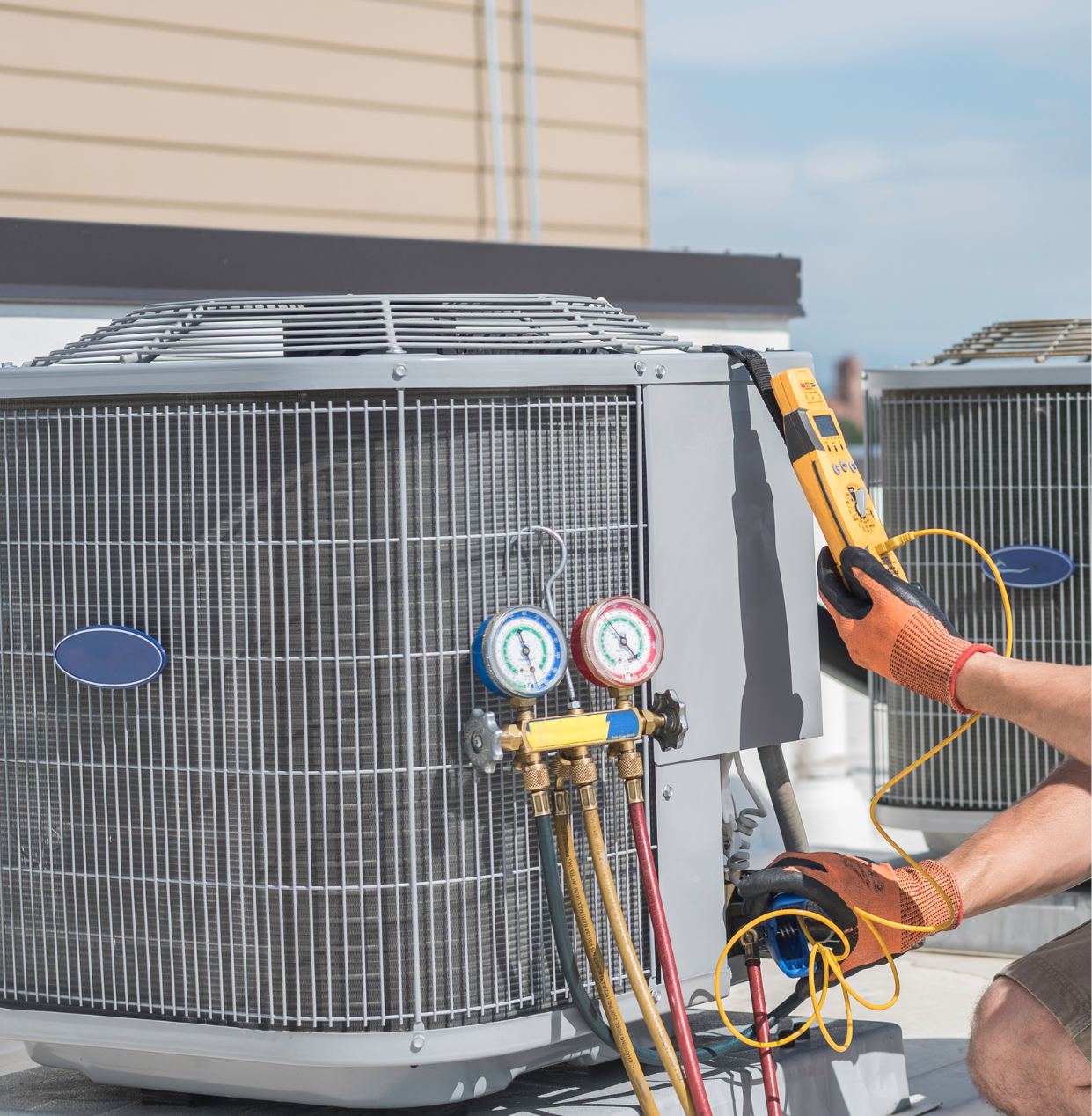
I’ve seen how small issues show up right when homeowners are least prepared. A drain line that’s starting to clog, a capacitor that’s weak but still working, or an outdoor unit with bent fins that slightly restrict airflow. During a calm week it might pass as “it seems okay.” Then a storm hits, the power fluctuates, and the system either trips a breaker, runs but fails to cool, or starts short cycling. When that happens, you want the system to fail in a way that’s predictable and fixable, not in a way that spreads damage.
This guide is written for Kansas City homeowners who want practical, defensible AC maintenance in Kansas City before the first major storm cell rolls through.
What storms actually do to outdoor units
A lot of damage around storms is indirect. It’s not always a lightning strike that kills everything in one moment. More often it’s the combination of wind, debris, and electrical instability.
High winds can push branches, gravel, and loose yard debris into the condenser coil or fan. If the fan can’t spin freely, the compressor has to work harder, and that’s where failures tend to start. Even if the fan still moves, bent fan blades can reduce airflow and raise system pressures.
Power fluctuations are another common problem. A short power drop can reset electronics, but repeated voltage dips can also stress start components like capacitors and contactors. On some systems, the symptoms show up later. The unit runs for a while, then struggles to start, or it hums and won’t catch. On others, the system starts but isn’t cooling correctly, because airflow is compromised or refrigerant behavior changes when the system is off balance.
Finally, storms often come with heavy rain. Rain is not automatically bad for an outdoor unit, but it can expose problems that already existed. A drain line that’s borderline can overflow during periods of high condensate load. A dirty evaporator coil can reduce moisture removal, leaving your indoor air feeling clammy and forcing longer runtimes.
The difference between “working” and “storm ready”
“Working” is a low bar. A system can turn on, blow air, and still be unprepared for stress. Storm-ready cooling means several things line up at the same time: airflow is correct, the electrical components are healthy, condensate drains properly, and the system can handle a brief disruption without turning into a lockout situation or a safety shutdown.
In practical terms, you can listen and watch for warning signs that show up before the storms do. Some examples from real call patterns in the Kansas City area:
- The system cycles on and off faster than it should during a hot afternoon, then runs longer after the thermostat is set back and forth.
- The indoor air handler fan runs, but the outdoor unit seems reluctant to start, or it starts with a heavier hum.
- Cooling improves after the system has been running for 20 minutes, which often points to airflow restrictions or a component that stabilizes once warmed.
- You notice a musty odor when the system kicks on after rain, which can indicate coil moisture issues or drain line problems.
If you see any of those behaviors, it’s a strong sign that preventive service is more cost-effective than waiting for the “real problem” to become obvious.
Before you schedule anything, know what to check
Homeowners get busy, especially in summer, so it helps to know where the system usually fails first. In Kansas City, the most common stress points tend to be the components that manage airflow and moisture, plus the start and run parts that deal with electrical stability.
Airflow and cleanliness
Restricted airflow is the quiet killer of cooling performance. A dirty condenser coil can reduce heat transfer, which raises pressures and makes the compressor work harder. On the indoor side, a clogged filter, blocked return, or dirty evaporator coil can make the system cool less effectively and remove moisture poorly.
Humidity matters here. Kansas City’s summer air holds moisture, and an AC system is supposed to condense it away. When airflow drops, the evaporator coil may not operate in its best range. The result is often uneven cooling and a home that feels sticky even when the thermostat reads a reasonable temperature.
Electrical start components
Capacitors and contactors are frequent trouble spots when storms bring power swings. These parts aren’t always “dead” in the early stages. They can fail intermittently, especially when temperatures are changing quickly or when the system attempts to start repeatedly during peak demand.
If you’ve ever heard a buzzing sound, a click with no start, or the outdoor fan trying to spin without the compressor engaging, you’re in the zone where electrical diagnostics become important.
Condensate drainage
Rain can trigger issues because it coincides with heavy cooling demand and higher indoor humidity. If the drain line is partially blocked, water backs up in the drain pan. Some systems will trigger a safety switch and shut down the unit. Others may just overflow into the surrounding space, which can lead to water damage and moldy odors.
Drain issues can be simple, like algae buildup, or they can reflect deeper problems such as improper slope or disconnected lines. Either way, they’re worth addressing early, because fixing a drain line before it overflows usually costs less than remediating water intrusion.

A storm-season maintenance plan that fits real life
You do not need to turn your life into a home inspection calendar. You do need a plan that covers the highest-impact checks at the right time. The sweet spot for many Kansas City homeowners is to have maintenance done before the first stretch of intense heat and storm activity, then confirm that the system is still performing after the first major weather event.
Even if you’re handy, there’s a limit to what you should DIY. Refrigerant and sealed system repairs are regulated. Electrical work inside the air handler should also be approached carefully. But there are several practical actions homeowners can take safely, and then there’s professional service that goes deeper.
What you can safely do between storms
This is the part where I recommend focusing on safe, observable checks. You’ll often catch the problem category early, and you’ll reduce the likelihood that a minor issue becomes a shutdown during a storm.
- Replace or upgrade your air filter to the correct size for your system, and check it monthly during peak season
- Keep outdoor unit clear of leaves, sticks, and tall grass, but do not block airflow around the sides
- Watch for unusual sounds, especially repeated clicking or humming without a full start
- Confirm water is draining properly during cooling season, and look for overflow or pooling around the indoor unit
- Note any change in cooling performance, including uneven temperatures or longer run times
If you do only one of these, make it the filter. Filters are the simplest lever you have, and they affect both comfort and system health.
What a professional AC maintenance visit should include
When you hire an HVAC contractor in Kansas City MO, you want more than a quick look and a brochure. A legitimate AC maintenance in Kansas City should focus on assessing components that influence reliability during electrical stress, airflow issues, and moisture handling.
Every home is different, but the right approach typically includes checking system performance, inspecting both indoor and outdoor components, and verifying that safety controls behave as expected. You should expect measurements and observations, not just “it looks clean” as a conclusion.
A good maintenance visit also asks questions. I’m not talking about small talk. A technician should ask whether you’ve noticed warm rooms, short cycling, odd noises, or rising electricity use. Those answers help narrow down what to inspect first.
Here’s what I look for in a well-run visit:
First, the indoor side. The technician should inspect the evaporator coil condition, evaluate airflow and blower operation, and check that the condensate drain is clear and flowing correctly. A clean drain line and properly operating blower are essential during humid storms when condensate load can spike.
Next, the outdoor side. The condenser coil, fan condition, and electrical connections matter. If the unit has bent fins or debris packed in the coil, airflow drops and system pressures rise. The technician should also check the general condition of the unit, including how securely it’s mounted and whether anything is obstructing airflow.
Then, the electrical and controls side. Capacitors, contactors, and thermostat communication are crucial for start reliability. Storm season is when weak start components tend to show themselves, and proactive testing can prevent a failure at the worst time.
Finally, performance and documentation. You want some record of what the technician measured and observed, especially if your system is older. That history is valuable when you later troubleshoot HVAC repair in Kansas City MO.
Common storm-season failure patterns in Kansas City
Storms create predictable stress patterns, and once you recognize them, you can respond faster. You’re not just trying to keep the AC running. You’re trying to avoid the type of failure that creates expensive secondary damage.
1) The system won’t start after the storm
After a storm, a no-start call usually points to either power disruption issues, a tripped safety device, or an electrical component under stress. The outdoor unit may sit quietly even though the thermostat calls for cooling.
If the breakers were affected, the simplest explanation can be a tripped breaker or a reset requirement. But if power is fine and the system still will not start, you move into electrical diagnostics. A technician will typically check start components and control circuits and verify that the compressor has the required conditions to start reliably.
2) The system starts, but it never really cools
This one is trickier because homeowners may assume the AC is “on” but the temperature won’t drop. In many cases, the culprit is airflow. Dirty coils, clogged filters, blocked returns, or a condenser coil coated with debris after the wind event can reduce heat removal. When airflow is restricted, the system struggles to reach setpoint.
Sometimes the symptom is a frozen or partially iced evaporator coil, which again ties back to airflow problems. In humid conditions, slow cooling can feel like the system is failing, when what’s happening is it’s operating outside a comfortable efficiency range.
3) The indoor unit runs, and the house feels damp
When air feels humid, it often means the system is not removing moisture the way it should. That can come from insufficient airflow, low refrigerant performance symptoms, a coil that’s dirty, or drain issues that affect proper operation.
Storm season adds humidity load quickly. If the system’s moisture removal isn’t keeping up, the house can feel clammy even at a decent thermostat setting.
4) Water issues inside the home
Condensate drainage problems are especially important in the weeks after storms. Heavy rain does not always cause the drain to fail, but it often coincides with higher cooling demand and more condensate production.
If you see water around the indoor unit, staining, or a “wet” smell, don’t ignore it. Water damage can become expensive fast, and mold risk increases when moisture persists.
Judgment calls: when to wait and when to act immediately
Not every odd behavior requires immediate shutdown. A smart approach is to separate “annoying” from “likely to worsen.”
If your unit runs but cools poorly, it’s often worth scheduling service soon, because prolonged operation under stress can raise wear on components. A system that short cycles repeatedly can also stress the compressor start sequence. In storm conditions, that’s a recipe for compounding the original issue.
If your unit trips breakers, shuts down repeatedly, or shows signs of electrical distress like burning smells or persistent buzzing, you should treat it as urgent. That’s not a “watch it for a week” situation.
Water signs are also a faster escalation category. Any overflow, pan leaks, or repeated drain backups require prompt attention. Drying and cleaning are never fun, and prevention is far cheaper.
Cost and trade-offs: proactive maintenance vs. Last-minute repairs
Homeowners sometimes hesitate because they see maintenance as a “nice-to-have.” In reality, the value comes from where the system usually fails.
A weak capacitor might not fully fail until it’s stressed by a power event. A clogged drain line might run for days and then overflow during a humid cold front and heavy rain. A dirty coil might only cause noticeable performance loss during high-heat weeks, which is exactly when everyone notices it.
Proactive AC maintenance tends to catch issues earlier, when the repair is often straightforward. A lot of HVAC repair in Kansas City MO is about diagnosing what changed, because the system can behave differently depending on humidity and outdoor temperatures. Maintenance creates a baseline and makes future troubleshooting faster.
That said, maintenance isn’t automatically perfect. Some failures are sudden, especially if a surge damages electronics unexpectedly. But maintenance reduces the odds of a slow-burn problem going unnoticed until storm season pressure exposes it.
How to prepare your system before the first major storms
If you want a practical, time-based approach, think in terms of readiness, not perfection. You’re aiming for “the system is clean, airflow is stable, and safety controls are functioning.”
A good strategy in Kansas City is to schedule maintenance during the early part of summer heat, not on the first day a storm forecast looks dramatic. Waiting until peak demand can mean delayed service when you need help most.
Also, make sure your thermostat settings and expectations match reality. In humid weather, a system may run longer than it does in drier conditions. If you try to cool too quickly from an extreme indoor temperature, you can overload the system and trigger short cycling patterns if the equipment is already borderline.
If you have pets, storage rooms, or blocked vents, address that before storms. Air needs to circulate. When returns are blocked by clutter or closed off for “aesthetic reasons,” airflow restrictions can turn into comfort problems and compressor strain.
After a storm: what to do right away
When storms pass through, the first hour matters. You’re not trying to troubleshoot everything. You’re trying to detect obvious hazards and prevent additional stress.
If there was a power interruption, check whether your thermostat is calling and whether the system responds normally. If your unit is off and won’t start, try the thermostat normally, and confirm power is restored at the breaker.
If the unit starts but performance is off, don’t keep resetting it repeatedly. Frequent resets can put stress on components by encouraging repeated start cycles. Give it time to stabilize, then call for service if it’s clearly not cooling or if you notice water issues.
If you hear unusual noises like grinding, persistent rattling, or a fan that sounds off-balance, it’s often related to debris damage. In wind events, something can nudge a fan blade or force the unit’s internal parts out of alignment. That’s not a “wait and hope” situation.
Choosing the right contractor for HVAC repair in Kansas City MO
When storms hit, you may feel pressure to choose whoever answers the phone first. Speed matters, but so does competence. A contractor should be able to communicate what they suspect, why, and what they plan to check.
Here are a few things I consider when recommending an HVAC contractor in Kansas City MO:
Ask whether they specialize in diagnostics, not just repairs. Diagnostics reduce guesswork, which reduces the chance of replacing parts that aren’t the real issue. Look for whether they discuss preventive steps for your specific system, not generic advice.
Also, pay attention to how they handle safety. If they downplay electrical and safety concerns, that’s a red flag. A professional approach respects the system as a set of connected components, not a random set of parts that can be swapped blindly.
Finally, consider responsiveness and transparency. A reliable service team will explain options, timeframes, and what you can expect as the system is evaluated.
Reliability tips that go beyond maintenance
Maintenance is the backbone, but reliability also depends on how the system is used and how the environment around it is managed.
For example, outdoor unit placement matters. If landscaping has grown up too close, airflow suffers. If mulch is piled against the coil, moisture and debris management becomes harder. If you’ve ever noticed that the unit looks darker or “gunked up” faster than it used to, that’s often a clue that nearby conditions have changed.
Then there’s indoor air handling. Return vents should stay open, and supply registers should not be blocked by furniture. If you have rooms that are consistently warm or cool, you can address airflow balance, but you want a technician to check ducting and system behavior before making big changes.
The goal is to prevent the system from constantly fighting low airflow, high humidity pockets, or clogged paths. When the system doesn’t have to struggle, it’s easier for it to ride out the electrical and weather turbulence that comes with storms.
A final, practical checklist for storm season readiness
Storm season readiness isn’t one big action. It’s several smaller actions that stack up to a better outcome.
Here’s a focused storm readiness checklist you can use as a last pass before storms intensify:
- Confirm your air filter is the correct size and is clean enough for peak run time
- Ensure outdoor airflow paths are clear, and remove obvious debris without bending coil fins
- Listen for unusual outdoor sounds during cool-down cycles and note when they happen
- Check for any indoor water signs, drain odors, or dampness around the air handler
- Schedule professional AC maintenance in Kansas City if you have not had tune-up service this year or if you’ve noticed performance changes
If you do this and still run into trouble after a storm, you’ll be responding with clarity rather than confusion. That matters. When a technician can quickly narrow down what changed, repair decisions become more accurate and less expensive.
Kansas City storms can be unpredictable, HVAC contractor in Kansas City MO but your AC system does not have to be at their mercy. With the right maintenance habits, healthy airflow, and dependable electrical performance, your cooling equipment is more likely to run through heavy weather without drama. And if something does fail, you’ll have started from a stronger foundation, which typically means faster diagnosis and more straightforward HVAC repair in Kansas City MO.
All 4 One Heating & Cooling
5828 Woodland Ave, Kansas City, MO 64110, United States
816-699-8366
[email protected]
Website: https://all4onekc.com/